Dinner has turned into a battle again. Not because you made the wrong thing. Not because you’re a bad cook. But because the broccoli is touching the rice, the pasta is the wrong temperature, and apparently tonight’s plate looks different from last Tuesday’s and that is simply not acceptable.
If you have a picky eater, you know this script by heart. And you also know that no amount of “just try one bite” has ever worked the way the parenting books promised it would.
Here’s what I’ve found after years of this: sometimes it’s not the food. It’s the setup. Picky eaters often aren’t being difficult — they’re responding to very specific triggers that, once you understand them, you can actually work around. And there are products for picky eaters that address exactly those triggers, quietly and without a fight.
These are the ones that have made the biggest difference in our house.
Christie’s take: I used to think picky eating was a willpower problem — theirs or mine. It’s not. It’s a sensory and control problem, and once I started treating it that way, mealtimes got dramatically easier. The right tools help more than the right lectures.
Before getting into specific products, it helps to understand what’s actually driving picky eating — because the products that work are the ones that address these root causes directly.
Research on selective eating consistently points to the same handful of triggers:
Foods touching each other — a genuine sensory issue for many kids, not drama
Temperature sensitivity — some kids will only eat food in a very specific temperature range
Feeling out of control — picky eating often increases when kids feel they have no say in what happens
Visual overwhelm — a plate with too much on it triggers refusal before a bite is taken
Lack of novelty or engagement — boring presentation makes food feel like a chore
The best products for picky eaters don’t trick kids into eating. They reduce these specific friction points — and that makes all the difference. When the setup is right, the food stops being a battle and starts being just dinner.
A fun setup lowers the resistance before the first bite. It sounds small. It isn’t.
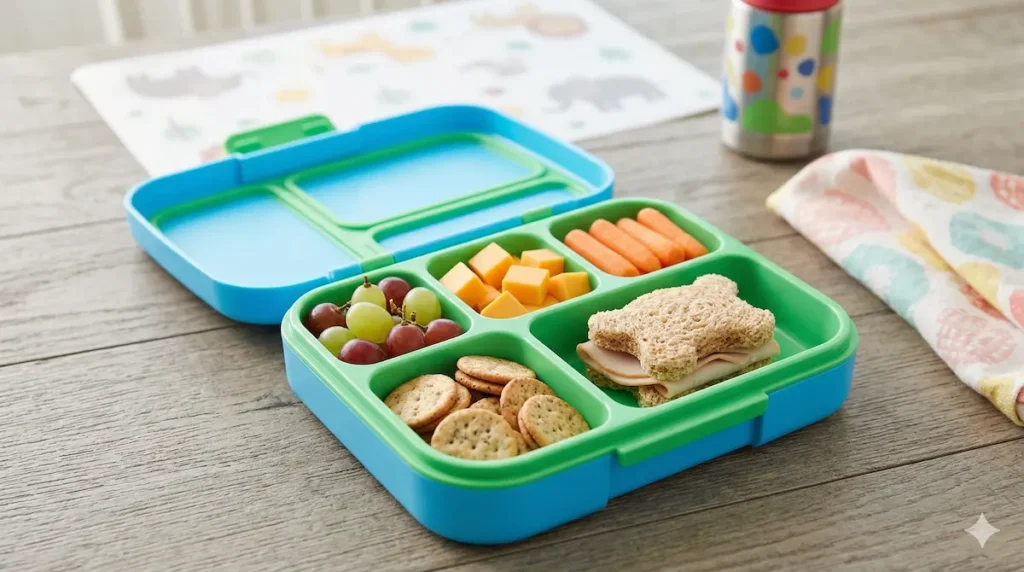
🍱 Bento Boxes & Compartment Containers — Fix the “Food Touching” Problem
The complaint “the food is touching” is one of the most common — and most dismissed — things picky eaters say. But for kids with sensory sensitivity, mixed foods genuinely feel wrong in a way that’s hard to override. The fix isn’t arguing. It’s separation.
Compartment containers are the single highest-impact product category for picky eaters because they solve this problem structurally, not through negotiation.
Bentgo Kids Prints Bento-Style Lunch Box
★ Top Pick — Highest Impact
What it solves: Five completely separate compartments mean nothing ever touches anything else. You can pack a protein, a grain, two vegetables, and a fruit — all in one box, all in their own lane. For kids who refuse mixed food, this is often the difference between eating lunch and coming home with a full lunchbox.
Why moms like it: Leak-resistant, dishwasher safe, and available in more than a dozen kid-friendly designs — fairies, leopards, dinosaurs. The design matters because kids are more willing to use something they chose and feel ownership over.
Best for: School lunches, after-school snacks, and any meal where your child needs to see that their foods are completely separate. → See the Bentgo Kids bento box on Amazon
Other compartment options worth knowing
Divided dinner plates — for home use when you want the separation visible at the table without the lunchbox format. See divided plates on Amazon
Silicone sectioned snack trays — great for snack time when you want to offer variety in small portions without a full plate setup
Ziploc divided containers — the budget option that still gets the job done for pantry snacks
🌡️ Temperature Containers — Fix the “It’s Cold” Problem
Temperature is one of the most overlooked picky eater triggers. Some kids genuinely won’t eat food that’s dropped below a specific warmth — and sending a cold pasta lunch to school almost guarantees it comes home uneaten. This isn’t stubbornness. It’s a real sensory preference. The fix is keeping hot food hot.
OmieBox Insulated Bento Lunch Box
★ Best for Temperature-Sensitive Kids
What it solves: The OmieBox has a stainless steel thermal insert that keeps hot foods hot for hours, while the surrounding compartments stay cool for things like fruit and veggies. Hot pasta and cold grapes in the same box, neither affecting the other. For kids who refuse cold lunches, this is the product.
Why moms like it: It works. That’s really the whole review. You pack it in the morning, your kid opens it at lunch and the food is still the right temperature. The design is simple and the thermal insert is easy to clean.
Best for: Kids who only eat warm food, kids who refuse school lunch, kids who come home with an untouched lunchbox because the temperature was wrong. → See the OmieBox on Amazon
This is one of the most overlooked picky eater fixes I’ve seen. Most parents focus on what they’re packing. The temperature of the food often matters just as much as which food it is.
🦕 Fun Utensils & Kitchen Tools — Lower the Resistance Before the First Bite
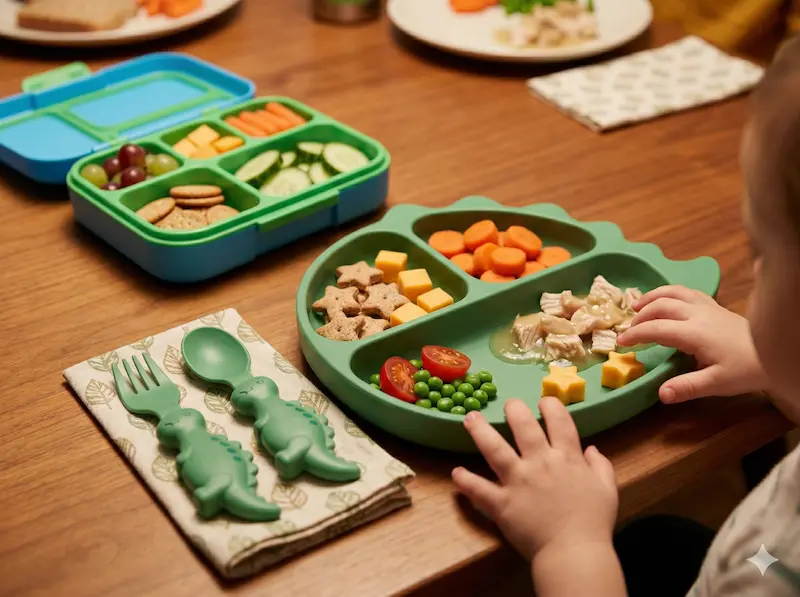
Fun utensils aren’t just cute. They work because they shift the dinner table from a place of anxiety and pressure to a place of play. When a child is engaged with a dinosaur pasta server, they’re focused on the fun — not on the broccoli. That distraction lowers resistance long enough for the first bite to happen. And the first bite is usually the hardest one.
Pastasaurus Pasta Server
What it solves: A dinosaur-shaped pasta server that makes serving noodles a whole event. Kids who normally pick at their pasta will actually ask to use it — which gets them at the table, engaged, and eating.
Best for: Pasta nights with a reluctant eater who needs a reason to show up to the table excited. → See the Pastasaurus on Amazon
Triceratops Taco Holder
What it solves: Turns Taco Tuesday into something kids actually look forward to. The holder keeps tacos upright and prevents the collapse that makes picky eaters abandon a meal. The dinosaur framing makes it feel like play, not dinner.
Best for: Any family that does tacos regularly — the novelty wears off eventually, but “eventually” is months of easier dinners. → See the Triceratops Taco Holder on Amazon
Dinosaur Tea Strainers
What it solves: Makes warm drinks feel like an adventure. For kids who are particular about beverages or who need an engaging reason to drink something warm, these make the drink the event.
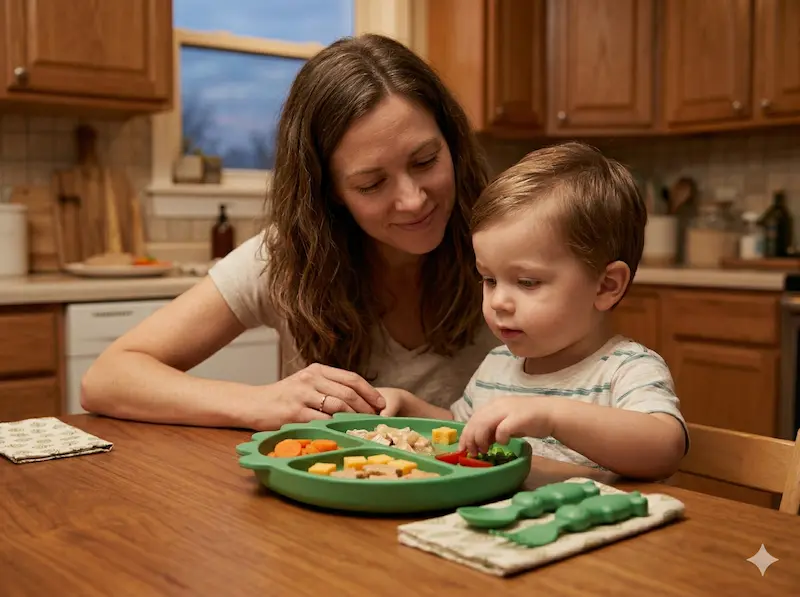
A calm mealtime setup changes the energy before food is even served. The tools help get you there.
🍽️ Divided Plates & Visual Tricks — Fix the Overwhelm Problem
A standard dinner plate with a full serving of food on it can be genuinely overwhelming for a picky eater. Too much food signals pressure — “eat all of this” — which triggers refusal before the fork is picked up. Smaller portions, visually separated, on a plate that feels manageable, changes the whole dynamic.
Divided dinner plates for home
Section plates at the dinner table serve the same separation function as a bento box but in a home setting. They signal to a picky eater that nothing will touch, which gets the meal off to a less anxious start. See divided dinner plates on Amazon
Colorful kids bowls
Color matters more than most parents expect. A bright bowl makes a small portion look intentional rather than meager. Kids who are given a bowl they choose and identify with are more likely to eat from it. See colorful kids bowl sets on Amazon
The small portion rule
No product required for this one — but it’s worth naming. Serve less than you think they’ll eat. A tablespoon of each food looks manageable. A full serving looks like a battle. If they finish and want more, that’s a win. If they don’t, nothing was wasted.
⚡ Easy Meal Shortcuts — For the Nights When Setup Isn’t Happening
All of the above assumes you have the time and energy to set up a thoughtful mealtime. Some nights you don’t. And that’s where meal shortcuts become the picky eater tool nobody talks about.
If your picky eater has a small set of “safe foods” — things they’ll reliably eat without a fight — stocking those in ready-to-serve formats removes the decision fatigue from your hardest nights. Pre-portioned pouches, individual freezer meals of their preferred foods, and simple components that assemble fast (cheese cubes, crackers, fruit, deli turkey) can get a nutritious enough dinner on the table without a battle on the nights when your energy is already gone.
The goal on those nights isn’t a balanced plate. It’s a fed child and a peaceful evening. Give yourself permission to take the shortcut.
[ MONETIZATION PLACARD — REPLACE BEFORE PUBLISHING ]
Insert HelloFresh / Green Chef affiliate block here. Suggested angle: “On nights when even the setup feels like too much, meal kits with pre-portioned kid-friendly options take the decision fatigue off the table entirely — they send exactly what you need, already measured.”
🧠 What I’ve Noticed About Picky Eaters (After Years of This)
After enough mealtimes, a few things become clear:
Control matters more than the food. Kids eat better when they feel like they have some say — even choosing between two options gives them enough ownership to reduce resistance.
Predictability reduces anxiety. Kids who know what to expect at the table (the same plate, the same setup, foods in the same spots) eat more reliably than kids who face a different presentation every night.
Overwhelm causes refusal. Too much food, too many choices, or a plate that looks “wrong” can shut down a picky eater before a single bite happens.
Pressure always backfires. The more energy you put into making them eat something, the less likely they are to eat it. Neutral presentation and low pressure consistently outperform any form of coaxing.
These aren’t parenting opinions. They’re consistent patterns that show up across research on selective eating. The products that work are the ones that address these patterns — which is why the focus here is on structure, temperature, and engagement rather than novelty for its own sake.
⭐ If You Only Buy 2 Things, Start Here
1. A good bento box
The Bentgo Kids bento box solves the “food touching” problem, gives your child some visual control over their meal, and works for both lunch and snack time. This is the highest-impact single product for most picky eaters.
2. One fun utensil
The Pastasaurus pasta server or Triceratops taco holder — pick whichever fits your most common dinner. One fun tool that your kid uses every week shifts the energy at the table more than you’d expect.
Free Download
Want a Weekly Reset That Makes Mealtimes Less Chaotic?
The free Busy Mom’s Weekly Reset Checklist includes a meal planning section so you’re not improvising dinner at 5 p.m. every night.
Picky eating in children is most often driven by a combination of sensory sensitivity, a need for control, and the natural developmental stage of neophobia — the fear of new foods — that peaks between ages 2 and 6. It’s rarely about behavior or defiance. Kids who refuse foods are usually responding to genuine sensory discomfort or anxiety, not testing limits. Understanding this changes how you approach the problem.
Do products for picky eaters actually work?
The best products for picky eaters work because they address the root causes of mealtime refusal — food touching, temperature sensitivity, visual overwhelm, and lack of engagement — rather than trying to force or trick a child into eating. They don’t solve picky eating overnight, but they consistently reduce mealtime friction. Most parents who use compartment containers and temperature-appropriate containers report a noticeable improvement in how much their child eats at school.
What meals work best for picky eaters?
Meals that work best for picky eaters are ones where components are served separately rather than mixed, where at least one element is a known “safe food,” and where portions are small enough to not feel overwhelming. Tacos, grain bowls, and bento-style plates with multiple small items consistently outperform casseroles and mixed dishes. Our 5-ingredient dinners for picky eaters list has specific recipes built around this approach.
What is the best bento box for picky eaters?
The Bentgo Kids Prints bento box is consistently the top-rated option for picky eaters because it has five fully separated compartments — nothing touches anything else. It’s leak-resistant, dishwasher safe, and comes in fun designs that kids choose and feel ownership over. The OmieBox is the better choice if your child also requires warm food, since it has a stainless steel thermal insert for hot items alongside separate cold compartments.
How do I get a picky eater to try new foods?
The most effective approach is repeated low-pressure exposure — putting a small amount of the new food on the plate (in its own compartment, not touching anything) without requiring it to be eaten. Research shows children often need 10–15 exposures to a new food before they’re willing to try it. The key is removing all pressure from the interaction. Praise for touching or smelling the food, never for eating it. Over time, familiarity reduces the anxiety around new foods more reliably than any amount of encouragement.
The Right Setup Changes Everything
Picky eating is exhausting. But a lot of the battle happens before the food even hits the plate — in whether foods are touching, whether the temperature is right, whether the setup signals “calm” or “pressure.” The best products for picky eaters work quietly in the background, changing the conditions that make mealtime hard.
Start with one thing. A bento box that keeps foods separate. An insulated container that keeps things warm. A dinosaur pasta server that makes dinner feel like less of a fight. You don’t need to overhaul the whole kitchen. You just need to change one variable at a time.
And on the nights when none of it works anyway — that’s just Tuesday. You’re doing fine.
Disclosure: This post may contain affiliate links. If you purchase through one of my links, I may earn a small commission at no extra cost to you. I only recommend things I genuinely use or believe in. Read my full disclaimer here.
About Christie
Christie is a busy mom based in New York writing about real life — quick meals, smart buys, and the honest truth about keeping it together when you’re pulled in twelve directions at once. No Pinterest perfection here, just practical strategies that actually work.