Disclosure: This post may contain affiliate links. If you purchase through my links, I may earn a small commission at no extra cost to you.
Everyone tells you kids are expensive before you have them. What nobody tells you about are the hidden costs of raising children — the small, relentless, completely predictable expenses that still manage to blindside you every single time. Not the daycare bill. Not the pediatrician copay. The other stuff. The stuff that doesn’t show up in any budget template but somehow wrecks the month anyway.
I’ve been keeping mental track of these for years — the costs I didn’t see coming, the ones that feel minor until I add them up, and the ones that are genuinely unavoidable versus the ones that are actually fixable with a little system. This is that list. If you’re doing everything right financially and still feeling behind, you’re probably being hit by several of these at once.
Quick Answer
The hidden costs of raising children that hit family budgets hardest include: convenience food spending on exhausted nights, constant small school requests, birthday party gifts for classmates, kids outgrowing shoes and clothes faster than expected, activity and sports fees that multiply, last-minute purchases from poor organization, and the invisible “mental load tax” that turns into money when the system breaks down. Most of these are partially fixable with simple household systems — meal planning, a gift closet, a clothing rotation, and a weekly family budget.
The grocery bill is the food cost everyone plans for. The hidden ones are everything else — and they’re significant.
The “Too Exhausted to Cook” Tax
Biggest hidden food cost
This is the cost that doesn’t have a line item but shows up constantly in bank statements. It’s the pizza order at 6pm because there was nothing thawed. The drive-thru on the way home from the school event that ran late. The “we’ll just grab something” that costs $45 for a family of four.
It’s not a lack of discipline. It’s a lack of backup options. Most families who consistently overspend on food aren’t doing it on nice dinners out — they’re doing it on desperate Tuesday nights.
Christie’s fix: Three emergency dinners, always in the house. Pasta and jarred sauce. A frozen rotisserie chicken. A bag of dumplings and soy sauce. The backup plan costs $10 and saves you from the $40 panic order. Full system at easy budget meals for busy moms.
The Snack Spiral
Adds up fast
Kids eat constantly. What they eat between meals is almost never budgeted for accurately. Individually packaged snacks — the ones in the convenient little pouches — cost two to three times more per serving than buying the same food in bulk and portioning it yourself. Multiply that across five days a week, two kids, and a school year, and you’re looking at hundreds of dollars.
Add sports snacks (the team mom coordinator role that somehow involves buying 20 individual Gatorades), school snack days, and the gas station run because someone is starving in the car — the snack budget is real and rarely tracked.
Christie’s fix: Bulk snacks portioned into reusable containers on Sunday. A snack bin per kid in the fridge. These are the lunch containers that cut our snack spending → — they know what’s theirs and I stop answering the same question fifteen times a day.
The “Last-Minute Grocery Run” Cost
Stealth budget killer
You go in for two things. You leave with $60 worth of stuff, half of which you didn’t need and a third of which will expire before it gets used. Unplanned grocery runs are one of the most consistent budget leaks for families — not because the individual trips are large, but because they happen constantly and nothing on those trips is accounted for anywhere.
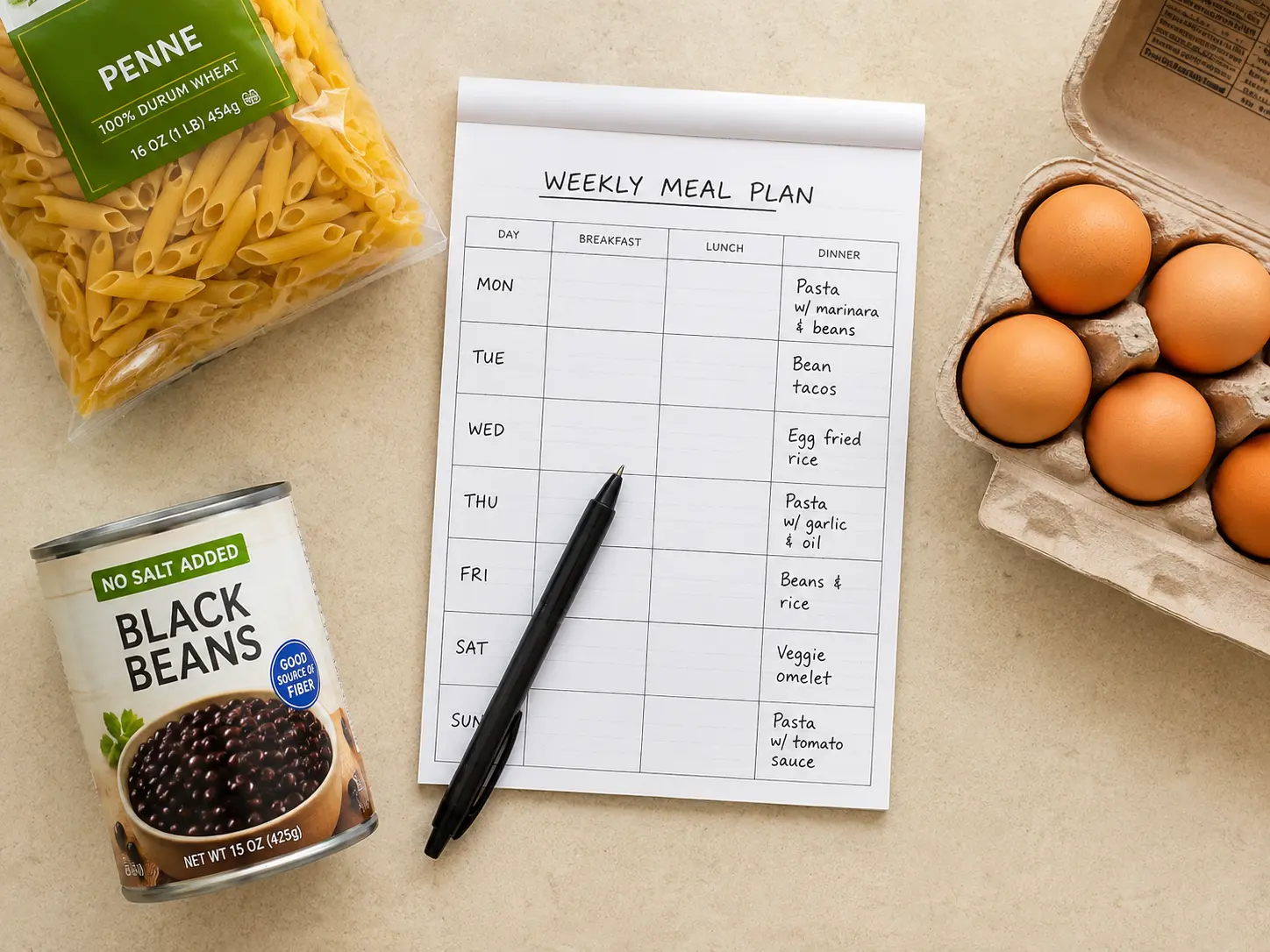
Christie’s fix: A weekly meal plan written before you shop means your grocery list has a purpose. If it’s not on the list for a specific meal, it doesn’t go in the cart. Takes ten minutes. Saves $30–$60 a week for most families.
The cart that was “just a quick run.” Every time.
🎒 The Hidden Costs of School and Activities
You know about tuition, supplies, and registration fees. You don’t know about everything that follows once school actually starts.
The “School Sent Home a Flyer” Budget
Ongoing and relentless
Every week there is something. A field trip permission slip with a $12 fee. A book fair. A spirit week where Wednesday is “crazy sock day” and someone needs new socks now. A class party where you’re assigned a dish. A fundraiser where the prize incentive means your kid is going to be heartbroken if you don’t participate. Teacher Appreciation Week. The spring carnival.
None of these is large. All of them together, across a school year, across multiple kids, represent a budget category that most families have never actually named or planned for.
Christie’s fix: A “school and kid expenses” envelope — a fixed weekly amount set aside for exactly this category. When it’s gone, it’s gone. You stop saying yes to everything automatically and start making actual choices.
Activity Fee Creep
Compounds quickly
You sign up for soccer. Then comes the registration fee, the uniform fee, the picture fee, the tournament fee, the travel fee for away games, the team dinner contribution, and the end-of-season gift for the coach. What started as a $75 activity became $300 before the season ended.
Multiply this across two kids in two activities per season. The math gets uncomfortable fast — and most parents don’t see it coming until they’re already in it.
Christie’s fix: Before signing up for any activity, ask the full cost including everything — uniforms, gear, tournament fees, travel, and the end-of-season stuff. Then decide if the total number works, not just the registration fee.
The Summer Care Gap
Annually surprising
School ends. Your job doesn’t. The gap between the last day of school and the start of summer programming — and then again between the end of camp and the first day back — is a real childcare cost that catches working parents every year. Summer camps, day programs, and backup care for school breaks are never cheap and are often finalized later than they should be, which means paying premium rates.
Christie’s fix: Plan summer care in January or February, not April. The best programs fill up and the prices are lower when you’re not making a panicked decision in May. Also — the library does a lot more than people think. Check their summer programs before paying for anything.
🎂 The Hidden Social and Birthday Costs
Kids are social creatures. Their social lives have a budget line that most parents significantly underestimate.
The Classmate Birthday Party Circuit
Every month, guaranteed
A class of 22 kids is 22 birthday party invitations over the course of a school year. You won’t go to all of them, but you’ll go to more than you’re expecting. At $20–$30 per gift, even attending half the parties in a class adds up to several hundred dollars a year — per child.
And then there’s your own kid’s birthday party, which is a whole separate category of expense that has a way of inflating beyond the original plan every single year.
Christie’s fix: The gift closet. Any time I find a good deal on a toy, book, game, or activity kit, it goes in a bin in the closet. Birthday invite comes home on a Thursday? I’m already done. I’ve spent $10 on a $25 gift and I haven’t made a single panicked Target run.
Holiday and Seasonal Costs That Multiply
Predictable but underplanned
Halloween costumes. Valentine’s Day cards and candy for the whole class. Easter baskets. Holiday gifts for teachers, coaches, and the bus driver. The school holiday party contribution. End-of-year teacher gifts. None of these are one-time events — they happen every year, on the same schedule, and still somehow feel surprising when the bill arrives.
Christie’s fix: Buy holiday supplies off-season. Halloween candy in November. Valentine’s supplies in February clearance. Teacher gift cards stocked in November before prices spike. Boring strategy, genuinely effective.
👟 The Hidden Clothing and Gear Costs
You know kids need clothes. You don’t know they need clothes this often, this urgently, and at this scale.
The Shoe Rotation Problem
Every 3–4 months
Children’s feet grow roughly two shoe sizes per year when they’re young. That’s two to three shoe purchases per child per year minimum — more if they’re in a sport that requires cleats, or dance that requires specific shoes, or school that requires specific colors. At $30–$60 per pair for anything that will last more than two months, this category costs more than most parents budget for it.
Christie’s fix: Keep a running size chart for each kid’s shoes and clothes. When you see a good sale in the next size up, you know whether to buy it. Eliminates the full-price panic purchase when something stops fitting overnight.
Sports and Activity Gear
Often underestimated
Each activity has gear. Soccer needs cleats, shin guards, and a ball. Baseball needs a glove, helmet, and bat. Dance needs specific shoes, tights, and leotards per class level. Swimming needs suits, goggles, and a swim bag. Every hobby, every sport, every extracurricular has an equipment list — and kids outgrow all of it.
Christie’s fix: Facebook Marketplace, local consignment sales, and the team parent group chat are all excellent sources for used sports gear in the right size. Most of it gets outgrown before it wears out. Someone always has what you need one size up.
Ten minutes of meal planning on Sunday. Saves multiple “we have nothing to eat” moments by Thursday.
🧠 The Invisible Costs Nobody Talks About
These are the hardest ones to name because they don’t show up as a line item. They show up as money gone with no clear accounting for where it went.
The Disorganization Tax
Avoidable with systems
Buying duplicates because you can’t find the original. Replacing items that got lost because there was no designated place for them. Rushing to buy something at full price because you didn’t realize it was needed until the last minute. The disorganization tax is real, it’s consistent, and it compounds across a household running at full speed with multiple kids.
Christie’s note: This one is less about money systems and more about household systems. A landing zone for backpacks, a designated spot for permission slips, and a weekly “what do we need this week” scan on Sunday cuts this category significantly.
The Mental Load Tax
Costs time and money
Managing a household with kids is a full-time cognitive job on top of whatever else you’re doing. When that mental load exceeds capacity — which happens regularly — the overflow becomes money. It becomes the takeout order. The forgotten appointment that costs a no-show fee. The gift bought at the last minute at full price. The subscription you forgot to cancel. The food that went bad because the week fell apart.
This is one of the most underacknowledged hidden costs of raising children, and it disproportionately affects the parent carrying the majority of the household management load.
Christie’s note: You can’t eliminate the mental load. You can reduce the financial damage it causes by building systems that run on autopilot — a weekly meal plan, a gift closet, a family calendar with a weekly Sunday review. The less you’re deciding in real time, the less it costs you when you’re already overwhelmed.
The “Keeping Up” Pressure
Real but optional
The elaborate birthday parties. The newest gear for the sport every other kid already has. The class trip you feel you can’t say no to. The extracurricular that costs too much but you don’t want your kid to feel left out. Social comparison is a budget leak specific to parenting, and it’s rarely spoken about directly.
Christie’s note: Kids remember experiences and attention, not price tags. A backyard birthday with homemade cake is remembered the same way a $500 party venue is — and sometimes better. You are allowed to set a budget and mean it.
[ MONETIZATION PLACARD — REPLACE BEFORE PUBLISHING ]
Insert HelloFresh affiliate block here. Christie’s angle: “The ‘too exhausted to cook’ tax is the most avoidable hidden cost on this list. Two nights of HelloFresh costs less than two takeout orders, the decision is already made, and I don’t have to think about it. That’s what I use for the nights when the mental load is full and dinner is not happening.”
The Full System
The biggest fixable hidden cost for most families is food. The full meal system — 30 budget dinners, a pantry list, and a rotation that prevents the emergency takeout spiral — is all here: easy budget meals for busy moms.
Free Download
Free Weekly Meal Planner & Grocery List
Cut the biggest hidden food cost — unplanned spending — with a weekly dinner plan written before you shop. Free, printable, and actually usable.
Not all of these are in your control. Some are structural — the social expectations, the school requirements, the relentless growth of children’s feet. But more of them are fixable than they feel like in the moment.
Fixable vs. Not Fixable — Quick Reference
Hidden Cost
Fixability
Fix
Takeout on exhausted nights
High ✓
3 emergency backup dinners always stocked
Snack overspending
High ✓
Bulk buy + Sunday portioning
Last-minute grocery runs
High ✓
Weekly meal plan before shopping
Birthday party gifts
High ✓
Gift closet stocked from sales
Clothing emergency purchases
Medium ✓
Size-up buying at clearance
Activity fee surprises
Medium ✓
Ask full cost upfront before committing
Disorganization purchases
Medium ✓
Designated homes for recurring items
School event requests
Low
Fixed weekly budget, say no when it’s gone
Summer care gaps
Low-Medium
Plan in January, not May
Social/keeping-up pressure
Personal
Decide your values and budget accordingly
Related Reading
For the full picture of where raising children costs show up — and which ones are structural vs. fixable — read the complete guide: how much does it cost to raise a child.
Common Questions
Hidden Costs of Raising Kids — Questions Answered
What are the hidden costs of raising children?
The hidden costs of raising children include convenience food spending on exhausted nights, constant small school requests, birthday party gifts for classmates, children outgrowing clothes and shoes faster than expected, activity and sports fee creep, disorganization-driven duplicate purchases, summer care gaps, and the “mental load tax” — spending that happens when household management overwhelms and things get purchased in reactive mode instead of planned mode.
What hidden cost of raising kids hits the budget hardest?
For most families, the biggest hidden cost is convenience food spending — takeout, drive-thru, and last-minute grocery runs triggered by exhaustion and lack of a backup plan. This category is significant because it happens frequently, feels individually minor, and rarely gets tracked. Families who address this one cost first — with emergency backup dinners and a weekly meal plan — often find the most immediate budget relief.
How do I stop overspending on kids’ birthday party gifts?
The most practical solution is a gift closet — a dedicated storage bin where you keep gifts purchased on sale throughout the year. When a birthday invitation comes home, you shop your closet first instead of making a last-minute full-price purchase. Set a per-gift budget ($15–$20 is standard and appropriate) and stick to it. Kids don’t remember the cost of a gift; they remember the party.
Why does raising kids feel more expensive than expected?
Raising kids feels more expensive than expected because most of the costs are recurring, small, and unpredictable individually — but constant in aggregate. The school requests, snacks, social obligations, clothing turnover, and activity fees don’t appear in pre-parenthood budget planning, but they show up reliably every week once you’re in it. Add convenience spending triggered by exhaustion and time pressure, and the gap between expected and actual costs becomes significant quickly.
What is the easiest hidden kid cost to reduce first?
Food is the easiest hidden cost to reduce first because it’s the most controllable and the fixes are immediate. A weekly meal plan written before grocery shopping, three backup emergency dinners always in the house, and bulk snacks portioned on Sunday will reduce most families’ unplanned food spending by $100–$200 a month within the first few weeks of implementing consistently.
The Costs Nobody Warned You About Are Real — And Most Are Fixable
The hidden costs of raising kids aren’t a sign that you’re doing it wrong. They’re a sign that parenting involves a level of ongoing, small, relentless spending that nobody’s budget template accounts for. Once you name them, though, most of them are at least partially fixable — not with extreme discipline or deprivation, but with a few systems that run in the background without much ongoing effort.
Start with food — it’s the category where most families find the fastest relief. The full meal system that cuts the takeout spiral, the emergency backup plan, and the weekly grocery routine is all in one place: easy budget meals for busy moms. And if you want the broader picture of where raising children costs show up across every category, the breakdown is at how much does it cost to raise a child.
Which hidden kid cost surprised you the most?
Drop it in the comments — I’d love to know which one hit your budget hardest. 👇
Disclosure: This post may contain affiliate links. If you purchase through one of my links, I may earn a small commission at no extra cost to you. I only recommend things I genuinely use or believe in. Read my full disclaimer here.
About Christie
Christie is a busy mom based in New York writing about real life — quick meals, smart buys, and the honest truth about keeping it together when you’re pulled in twelve directions at once. No Pinterest perfection here, just practical strategies that actually work.