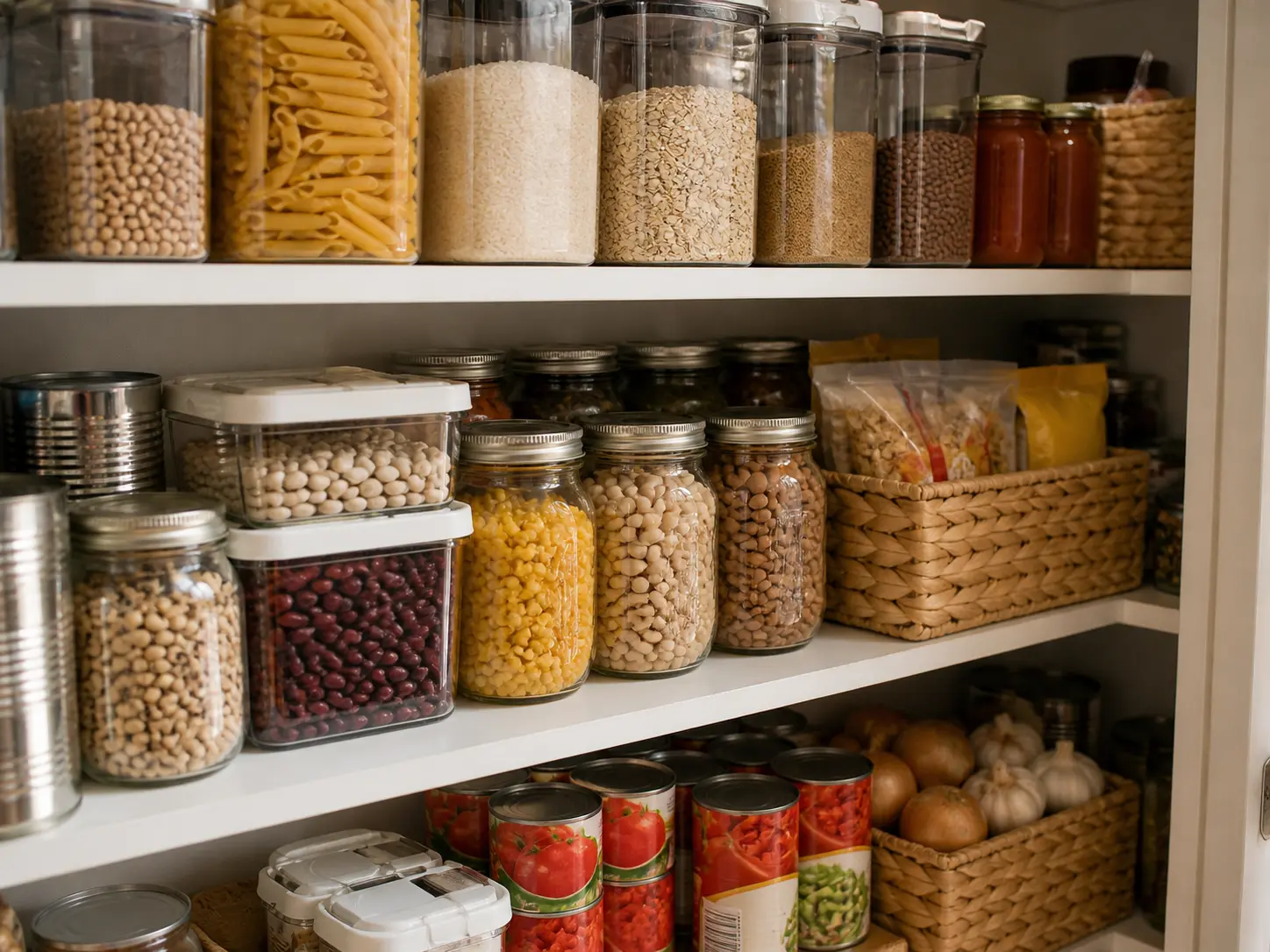
A $300 a month grocery budget for a family sounds impossible until you actually try it — and then you realize the problem was never money, it was the absence of a system. I feed my family of four on $300 a month. Not by couponing for hours on Sundays. Not by eating sad, repetitive meals. By following a specific sequence of decisions every week that prevents the spending that actually blows most grocery budgets.
This is the exact system. The breakdown, the weekly structure, the rules that actually move the needle, and what the month looks like when it works. Take what fits your family and leave what doesn’t.
Quick Answer
A $300 a month grocery budget is realistic for a family of 4 if you shop strictly from a meal plan, use a pantry inventory system before every shopping trip, and substitute expensive proteins with beans, lentils, or eggs at least twice a week. The budget breaks down to roughly $75 per week — achievable by buying store-brand staples, choosing frozen over fresh for most vegetables, buying meat in bulk and freezing in portions, and eliminating pre-packaged snacks in favor of whole-food alternatives.
$300 per month for four people is $75 per week, or about $10.70 per person per day including all three meals and snacks. Broken down that way, it’s tight but completely workable — as long as you know where the money actually goes.
Weekly $75 allocation
Proteins
$20–25/week
Chicken thighs, ground beef in bulk, eggs (18-pack), canned beans. This is the largest line item — controlled by buying in bulk and stretching meat with beans.
Grains & pantry staples
$15–20/week
Rice, pasta, oats, flour tortillas, canned tomatoes, jarred marinara, broth. Store-brand only. These don’t vary week to week much once you’re stocked.
Produce & frozen veg
$12–15/week
Onions, garlic, potatoes, bananas, apples, carrots. Frozen broccoli, peas, mixed veg for everything else. Fresh only for what gets used within 3 days.
Dairy & miscellaneous
$15/week
Milk, butter, shredded cheese (buy block), sour cream, yogurt (large tub not individual cups). Condiments, spices, and household items are separate from the food budget.
The key insight: the budget works because proteins and waste are the two biggest variables. Control those two and everything else falls into place. Expensive protein choices or uneaten food going in the trash are what turn a $75 week into a $120 week.
📅 The Weekly System That Makes $300/Month Work
The system isn’t complicated. It’s a specific sequence that takes about 20 minutes on Sunday and then runs mostly on autopilot through the week.
1
Audit the pantry and fridge before writing any list
Open every cabinet. Check the freezer. Write down what proteins you already have, what canned goods are there, what produce is about to turn. Build at least two meals around what already exists before buying anything new. This step alone saves $15–20 per week for most families.
2
Plan exactly 5 dinners — no more, no less
Monday through Friday. Weekend is flexible — leftovers, something simple, or one planned splurge if the budget allows. Write the 5 dinners on paper or use this is the meal planning notepad I use →. Each dinner needs to tie to a specific protein you’re buying that week.
3
Write the list from the meal plan — nothing extra
Every item on the list ties to a specific meal. “Chicken thighs” → Tuesday’s BBQ chicken and Friday’s tacos. If something isn’t needed for a planned meal, it doesn’t go on the list. This discipline eliminates “just in case” buying, which is where budgets quietly fall apart.
4
Shop once — mid-week top-ups for fresh produce only
One main weekly shop, one small mid-week run for fresh produce if needed (bananas, salad greens, anything with a short shelf life). Every extra trip to the store costs an average of $20–30 in unplanned purchases. Minimize trips, minimize spending.
5
Run a fridge clear on Thursday or Friday
Survey what’s left — whatever proteins, cooked grains, and vegetables remain become Thursday’s dinner. Fried rice, grain bowls, soup, quesadillas. This eliminates the food waste that is the silent budget killer for most families — an estimated $1,500–2,000 per year thrown in the trash.
A stocked pantry is what makes $300/month possible. It takes a month to build and then it sustains itself.
✅ Budget Grocery Rules That Cut the Bill in Half
Buy every protein in the largest pack available and freeze immediately
A family pack of chicken thighs is frequently 25–35% cheaper per pound than a standard pack. Same product, different packaging. Buy the large pack, divide into meal-sized portions at home, freeze in labeled bags. This takes 10 minutes and cuts your protein spend significantly over the course of a month.
Replace meat with eggs or beans twice a week — minimum
Shakshuka, black bean quesadillas, scrambled egg tacos, lentil soup — these are complete protein dinners that cost $3–5 for the whole family. Even if you have two meatless nights per week, you’re saving $15–20 per week in protein costs. That’s $60–80 per month — more than enough to make the $300 target.
Buy store brand for everything on this list — literally everything
Canned beans, pasta, rice, frozen vegetables, butter, milk, sour cream, yogurt, broth, canned tomatoes. The store brand is manufactured in the same facilities as the name brand in most cases. The price difference is 20–40% per item. On a full cart, this saves $25–35 per shopping trip.
Eliminate pre-packaged snacks entirely
Individually portioned chips, snack packs, single-serve crackers, kids’ snack pouches — these cost 3–5x more per serving than whole-food alternatives. Replace with: apples, bananas, carrots with peanut butter, hard boiled eggs, plain yogurt with frozen fruit, whole grain toast. The snack line item alone can be cut by $30–40 per month.
Never shop without having eaten first, and never bring kids if possible
Shopping hungry adds an average of $20–30 in impulse purchases. Shopping with kids adds a similar amount. Neither of these is negotiable advice — they’re behavioral spending triggers that bypass the list and the plan. Eat before you go. If the kids have to come, give them a specific job so they’re occupied.
The list is the budget. If it’s not on the list, it doesn’t go in the cart. Full stop.
[ MONETIZATION PLACARD — REPLACE BEFORE PUBLISHING ]
Insert HelloFresh affiliate block here. Christie’s angle: “Here’s something counterintuitive: HelloFresh 2 nights a week can actually help a $300 budget. Pre-portioned means zero food waste. No extra ingredients sitting unused. On tight weeks, knowing exactly what two dinners cost ahead of time makes the math easier, not harder.”
🍽️ What a $300/Month Grocery Budget Actually Looks Like
This is a real sample week — not aspirational, not a perfect week. A normal week on a $300 budget.
Ground beef tacos — stretched with black beans, tortillas, cheese, salsa. $7 total.
Thursday
Leftover taco meat over rice + whatever vegetables need to be used. $1 extra.
Friday
Flatbread pizza night — naan, jarred sauce, mozzarella, toppings. $8 total. Feels like a treat.
Sat–Sun
Pasta with meat sauce (double batch, freeze half) Saturday. Slow cooker chicken soup Sunday. ~$12 total for both.
Week total for dinners: ~$38. That leaves $37 for breakfasts, lunches, and snacks — completely achievable on oats, eggs, peanut butter, fruit, and yogurt.
⚠️ The Grocery Budget Killers That Wreck Most Attempts
Buying produce you don’t have a specific plan for. “I should eat more vegetables” is not a meal plan. “I need broccoli for Monday’s rice bowls” is. Fresh produce without a specific meal attached to it has a 60–70% chance of going in the trash. Buy frozen for everything without a specific use within 3 days.
Buying “convenient” versions of things you could prep yourself. Pre-shredded cheese (30–40% more), pre-cut vegetables (200–300% more), individual yogurt cups (3x more per serving), single-serve snack packs. These are budget death by a thousand cuts. Buy the block, the bag, the tub.
Making extra trips to the store. Research consistently shows that each unplanned grocery trip adds $20–30 in purchases beyond what you went for. One main weekly shop, one produce top-up if needed. That’s it.
Not accounting for food waste in the budget. If you spend $300 and throw away $60 worth of food, your effective food budget is $240. Food waste is a budget problem disguised as a storage problem. The fix is meal planning, not better containers — although pantry organizer bins → do help you actually see what you have before it goes bad.
The Full Budget Meal System
The $300 budget works because of what you’re cooking — not just how you’re shopping. For 30 specific cheap dinners that make this budget possible, the complete guide to easy budget meals for busy moms is where to go next. And for the weekly planning structure that ties the shopping and cooking together, the 7-day frugal meal plan for a family lays it all out.
Free Download
Free Weekly Meal Planner & Grocery List
The printable that makes the $300 budget possible — plan five dinners, write your list from the plan, and stop buying things that end up in the trash.
Is a $300 a month grocery budget realistic for a family of 4?
Yes, a $300 monthly grocery budget is realistic for a family of 4 if you shop strictly from a meal plan, use a pantry inventory system before every shopping trip, and substitute expensive proteins with beans, lentils, or eggs at least twice a week. It requires deliberate choices — store-brand products, frozen over fresh for most vegetables, and eliminating pre-packaged convenience foods — but it’s sustainable and doesn’t mean eating poorly.
How can I cut my grocery bill in half immediately?
You can cut your grocery bill significantly by auditing your pantry before shopping to eat what you already own, planning meals around weekly store sales, eliminating pre-packaged snacks in favor of whole foods, switching to store-brand products for all pantry staples, and reducing grocery trips to once per week. These five changes combined typically reduce a family grocery bill by 25–40% without changing the quality of food significantly.
What is the average grocery bill for a family of 4?
According to USDA food cost data, the average American family of 4 spends between $800–1,100 per month on food depending on the age of children and location. A moderate-cost food plan runs approximately $900–1,000 per month, while a thrifty food plan targets $550–700. A $300/month budget is below the thrifty plan and requires intentional meal planning, strategic shopping, and reliance on inexpensive whole foods.
How much should I budget per person per day for food?
A $300/month budget for a family of 4 works out to $2.50 per person per day for all meals and snacks combined. This is achievable when building meals around rice, pasta, beans, eggs, and inexpensive cuts like chicken thighs — all of which provide substantial nutrition for under $1 per serving. Breakfasts of oats and eggs, lunches of leftovers or peanut butter, and budget dinners make the daily per-person math work.
What is the biggest waste of money at the grocery store?
The biggest grocery budget wasters are: pre-packaged convenience items (pre-shredded cheese, pre-cut vegetables, individual snack packs), fresh produce without a specific meal plan (most ends up thrown away), unplanned grocery trips, and name-brand versions of pantry staples that are identical to store brands. Food waste itself — throwing away unused food — costs American families an estimated $1,500–2,000 per year and is the single most impactful budget leak to fix first.
$300/Month Is a System, Not a Sacrifice
The families who fail at a tight grocery budget usually fail because they’re trying to spend less without changing how they shop. The families who succeed do something different: they plan first, shop second. The money follows the system, not the other way around.
Start with the pantry audit this Sunday. Write five dinners. Build your list from those five dinners only. Do that for four weeks and you’ll have both the budget and the habit. For the meals that make this budget work, the complete guide to easy budget meals for busy moms has 30 dinners designed for exactly this kind of budget.
What’s your current weekly grocery spend — and what do you want it to be?
Drop it in the comments. I love seeing the real numbers — no judgment here. 👇
Disclosure: This post may contain affiliate links. If you purchase through one of my links, I may earn a small commission at no extra cost to you. Read my full disclaimer here.
About Christie
Christie is a busy mom based in New York writing about real life — quick meals, smart buys, and the honest truth about keeping it together when you’re pulled in twelve directions at once. No Pinterest perfection here, just practical strategies that actually work.